Stargazing in Monument Valley: The Night Sky Over the Buttes
A Navajo guide on stargazing in Monument Valley: the dark skies, the Milky Way over the Mittens, the best months, and staying overnight in a hogan to see it.
 By Daniel Begay, Monument Valley tour guide & Navajo cultural specialist
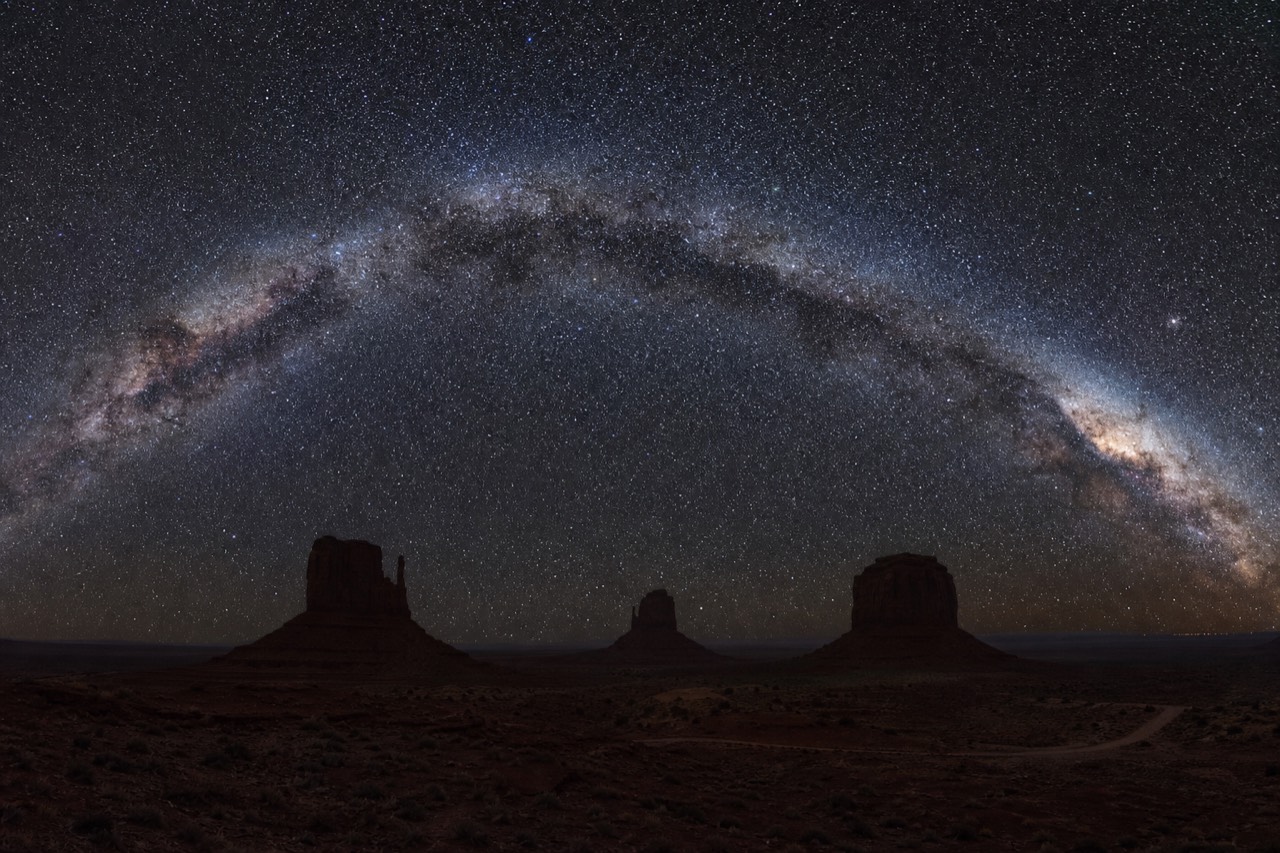
The last car usually leaves around sunset, and then something happens that day visitors never get. The color drains out of the buttes, the temperature drops, and the sky fills in from the top down until the Milky Way is a bright band leaning over the East Mitten. I have stood outside a hogan on nights so dark that the rocks were just black cutouts against the stars. There is no streetlight for miles. This is one of the few famous places in America where the sky after dark is as much of an attraction as the land in daylight.
Booking choice: Look beyond the daytime landscape with Navajo star stories and a guided night outing. Explore Navajo-guided stargazing
At a glance: 2.5 hours, English guide and water. Park entry extra. Stargazing depends on weather. Telescope not promised on this Viator option. Not recommended for pregnancy, spinal or serious heart conditions.
Why is Monument Valley so good for stargazing?
Monument Valley sits on remote Navajo Nation land, far from any city, so light pollution is minimal and the sky stays genuinely dark. The high desert air is dry and clear for much of the year, and the buttes give the stars a foreground nothing else can match. On a moonless night the Milky Way is visible to the naked eye.
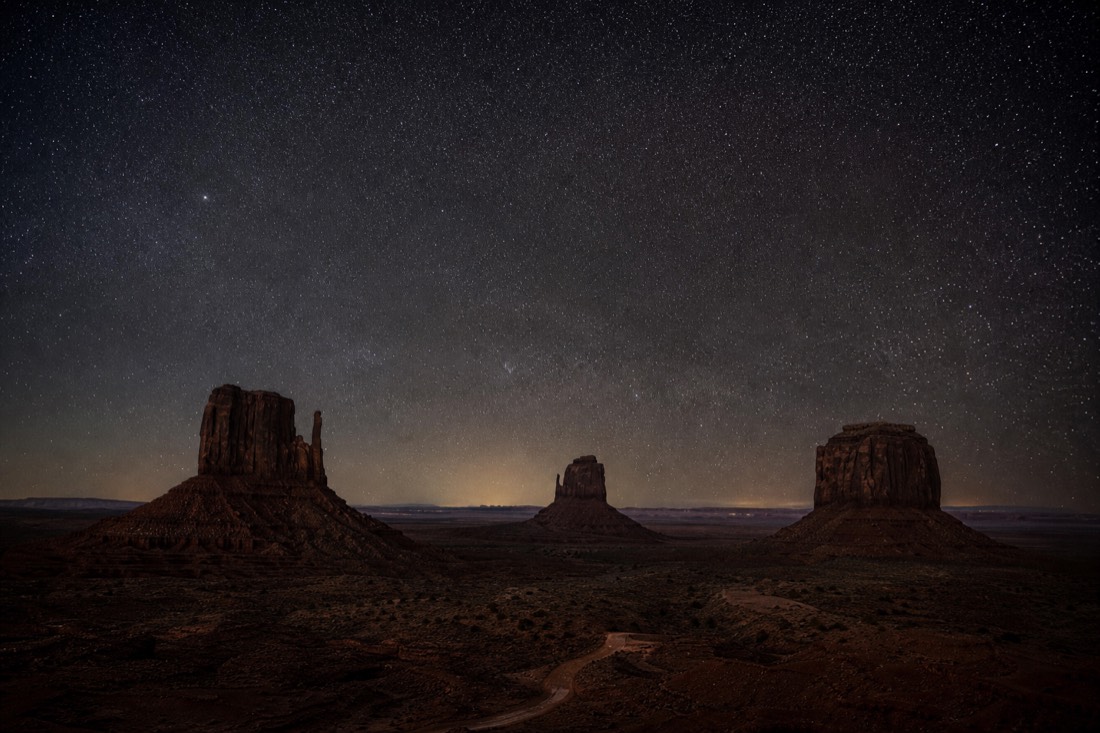
Distance is the whole secret. The nearest towns, Kayenta, Mexican Hat, Oljato, and Bluff, are small and far apart, and the closest cities are hours away. Las Vegas is roughly 400 miles, Flagstaff about 175. That isolation is a headache for planning a trip and a gift for the night sky. Dry desert air also holds fewer particles than coastal or humid climates, so on the good nights the sky has a depth that startles first-timers.
One planning note that trips people up: the Navajo Nation observes daylight saving time, while most of Arizona does not. In summer the valley runs an hour ahead of Phoenix and Page, which changes when full darkness actually falls. I cover the wider timing question in my guide to the best time to visit Monument Valley.
When is the best time to stargaze in Monument Valley?
The Milky Way core is highest and brightest from late spring through early autumn, roughly April to September, on nights near the new moon. Winter trades warmth for some of the crispest, clearest skies of the year. Avoid the nights around a full moon, which washes out fainter stars no matter the season.
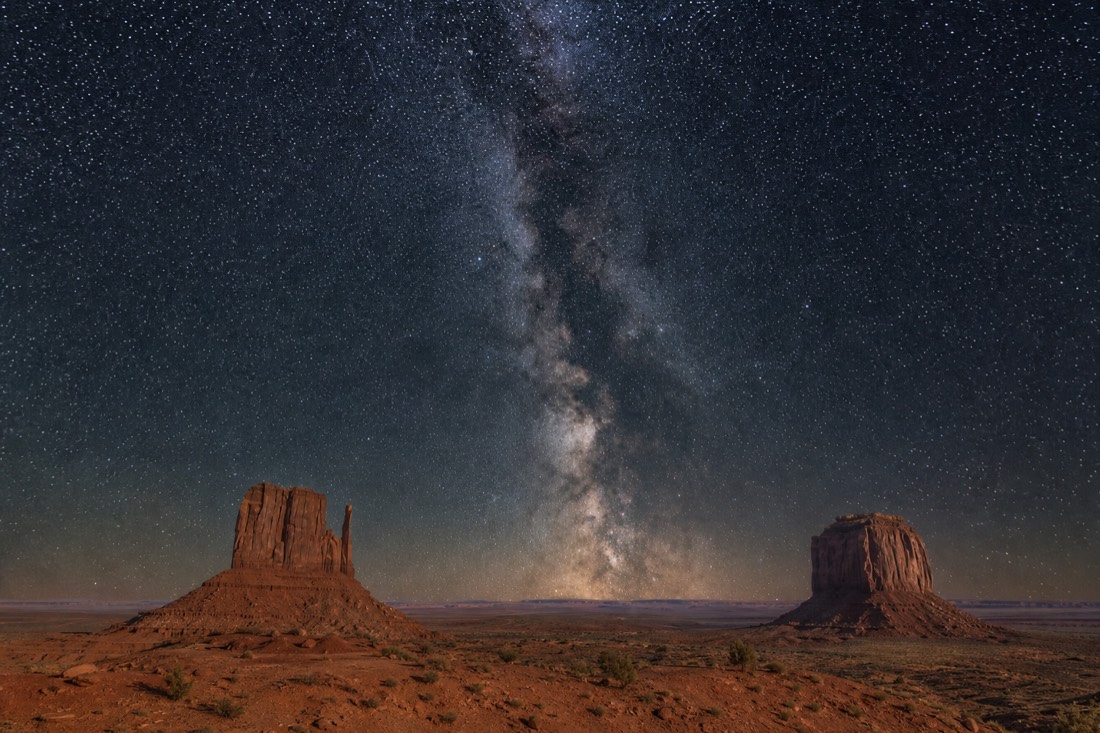
Here is how the year breaks down for a night under these buttes:
| Season | Sky conditions | What stands out |
|---|---|---|
| Spring (Apr to May) | Cool nights, clear air | Milky Way core returns, low crowds |
| Summer (Jun to Sep) | Warm nights, core overhead | Milky Way at its brightest, some monsoon clouds Jul to Aug |
| Autumn (Oct to Nov) | Crisp, settling weather | Core lingers early evening, comfortable temperatures |
| Winter (Dec to Mar) | Cold, very clear | Sharpest skies, winter constellations, dress heavily |
The single biggest factor is the moon, not the month. Check the moon phase before you lock a date, because a bright moon will flatten the Milky Way even on a cloudless summer night. Park hours also shrink in winter, with last entry around 2:30 in the afternoon from October to March, so an overnight stay matters more in the cold months if you want to be inside after dark.
What can you actually see in the night sky here?
On a dark, clear night you can see the Milky Way band with the naked eye, bright planets, thousands of stars, and the occasional meteor. Summer brings the galactic core arching over the buttes. The Perseid meteor shower peaks in mid-August and the Geminids in mid-December, both strong from a sky this dark.
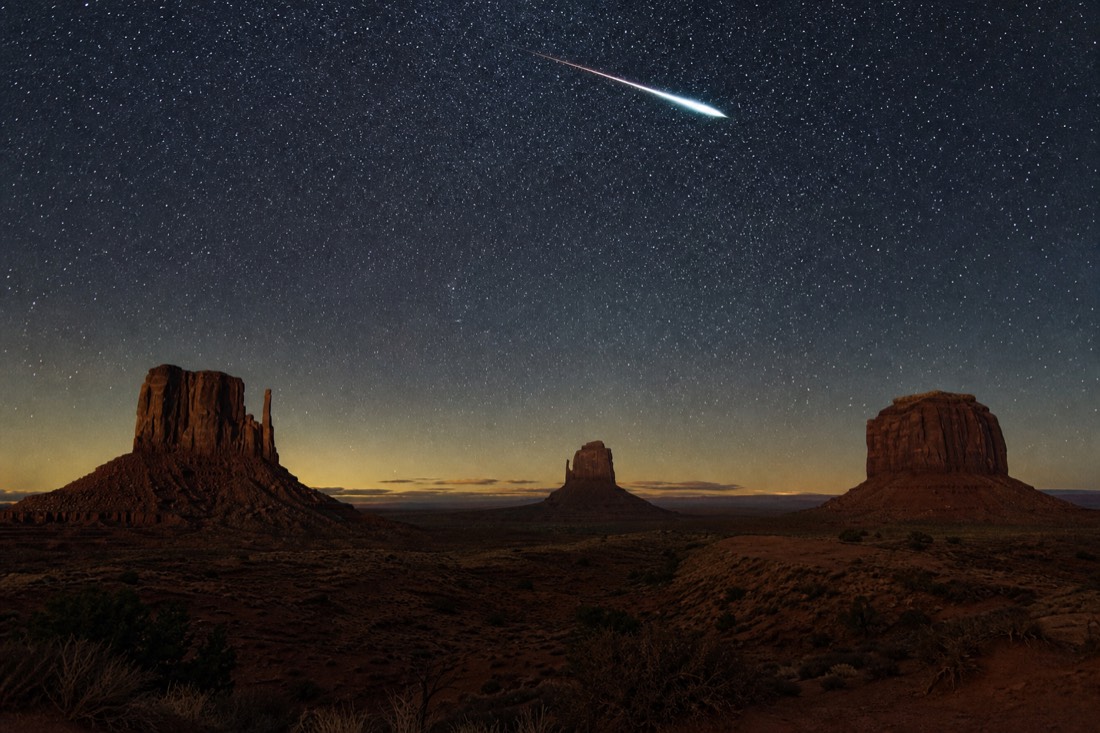
You do not need a telescope for the main event. The naked-eye view is the reason to be here.
| What you can see | When it is best | Gear you need |
|---|---|---|
| Milky Way core band | Apr to Sep, new moon | Eyes only |
| Bright planets | Varies through the year | Eyes only |
| Perseid meteors | Around mid-August | Eyes and patience |
| Geminid meteors | Around mid-December | Warm clothing |
| Star fields over the buttes | Any clear moonless night | A tripod for photos |
For photography, a tripod and a wide lens will pull in far more than your eye can, and the buttes give you a foreground most dark-sky sites lack. If night shooting is your goal, pair this with my daytime notes on Monument Valley photography spots, since the best foregrounds are the same rocks either way. A sunset tour does not automatically include staying after dark. Book a dedicated stargazing outing for a guided night visit.
Where can you stay to be there after dark?
Day passes end at closing. For a night visit, book a dedicated guided stargazing outing or arrange authorized overnight accommodation. The View Hotel is the only hotel within the tribal park, with rooms facing the Mittens. Goulding's Lodge sits just outside. A guided hogan overnight puts you on the valley floor for the whole night.
| Where to stay | Location | Night-sky access |
|---|---|---|
| The View Hotel | Inside the tribal park | Balconies face the Mittens, dark on site |
| Hogan overnight (guided) | On the valley floor | Full night in the backcountry, confirm the overnight return time |
| Goulding's Lodge | Just outside the park | Dark skies, short drive to viewpoints |
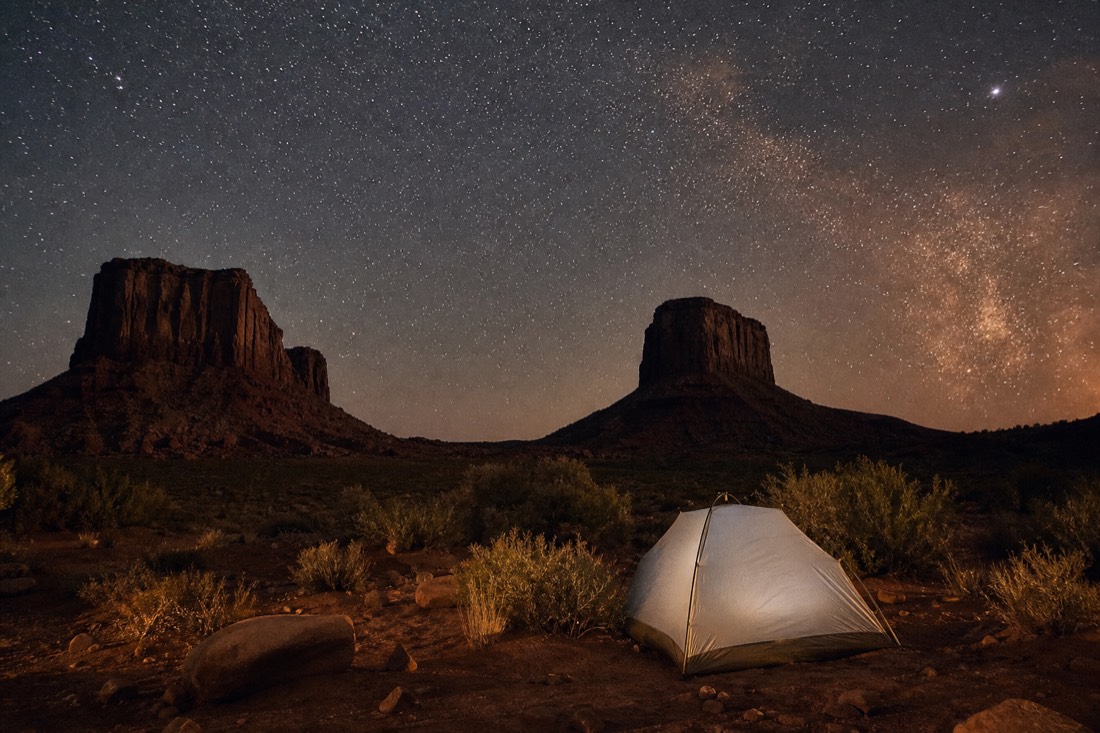
| The View campground | Inside the park | Tent and RV sites under open sky |
The View Hotel is the easy answer if you want a bed and a balcony pointed at the buttes, and you can check it directly at theviewhotel.com. For a room just beyond the boundary, Goulding's Lodge is the historic choice, the same lodge that first brought Hollywood here. Park rules on where you can and cannot be after hours are set by the Navajo Nation Parks department, which is another reason a guided overnight matters: it is the sanctioned way to be on the valley floor at night. If you want every lodging option compared, I keep a full guide to where to stay near Monument Valley.
What is a hogan overnight like?
A hogan overnight is a guided stay in a traditional Navajo dwelling on the valley floor, with the exact return time confirmed by the operator. You arrive in the afternoon, share a meal, watch the sunset color leave the buttes, and have the night sky to yourself once the day tours clear out. It is the deepest way to experience the valley after dark.
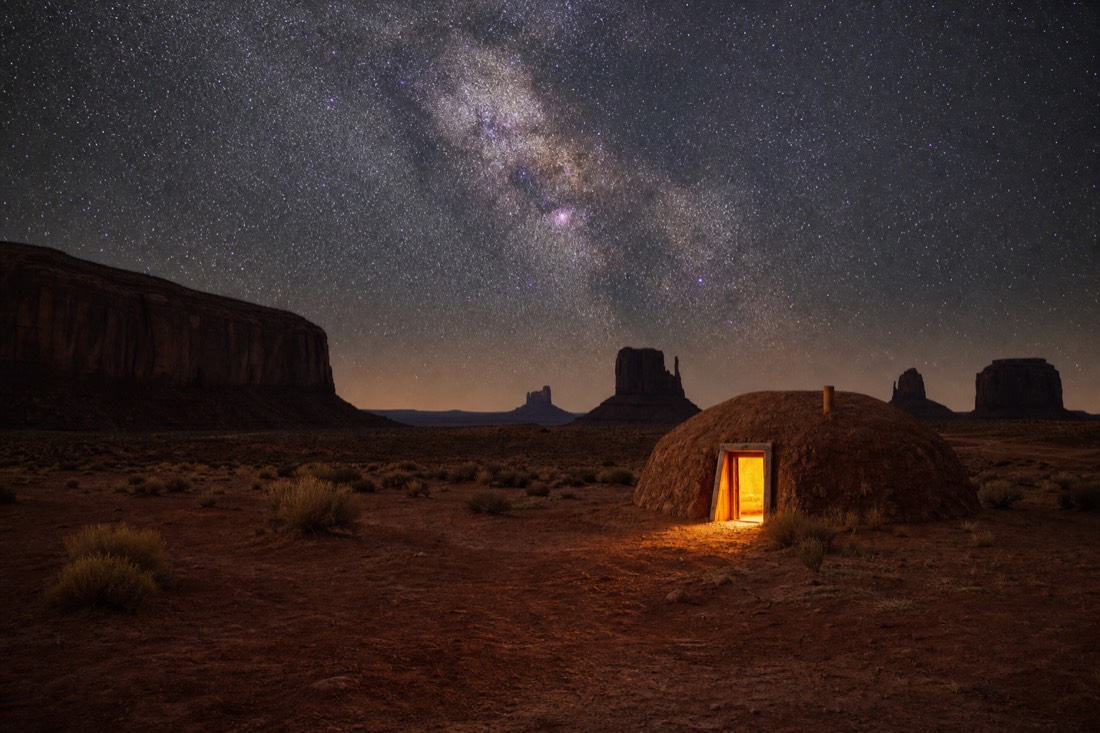
I am biased, because this is my favorite thing to share. The day runs are wonderful, but they end. The overnight is the one where you feel the place settle. When the last vehicle leaves and the stars come up over rocks that are hundreds of feet tall, most guests just go quiet, the same silence I described at the start. If you want to weigh the light of a day visit first, I compared sunrise versus sunset from the driver's seat, but neither one gives you the stars.
Day visitors see Monument Valley. People who stay the night see the other half of it, the half made of stars.
Make room in your itinerary
Navajo-guided stargazing
Have a travel date in mind? Check this option before arranging the rest of your trip. Look beyond the daytime landscape with Navajo star stories and a guided night outing.
Editorial starting point; use the choices below to check the fit.
Compare options and tailor your choice
2.5 hours, English guide and water. Park entry extra. Stargazing depends on weather. Telescope not promised on this Viator option. Not recommended for pregnancy, spinal or serious heart conditions.
The View Hotel meeting point; confirm the exact outdoor loading location on your ticket. Return to the start.
Combine a hogan night, dinner and breakfast with evening and sunrise touring. Overnight package; the listing’s duration fields conflict, so exact start/end must be confirmed. Minimum two; children accompanied. Park entry and tips extra. Sleeping mat/bag and lantern listed; no hotel room implied.
Visit the Totem Pole, Sun’s Eye and John Ford Point in the day’s changing light. 3 hours, English guide, water and native music. Select sunrise OR sunset for your month on Viator. Park entry extra. Uneven surfaces; unsuitable for back conditions. Children need two paying adults.
Select a date to see the Viator departure schedule.
Schedule only. Final availability, options and price are confirmed on Viator.Affiliate links: we may earn a commission at no extra cost to you. Product facts checked September 15, 2026.