Monument Valley Photography Spots: Where and When to Shoot
A Navajo guide's map of the best Monument Valley photography spots, the golden-hour timing that makes them, and which shots you can only get with a guide.
 By Daniel Begay, Monument Valley tour guide & Navajo cultural specialist
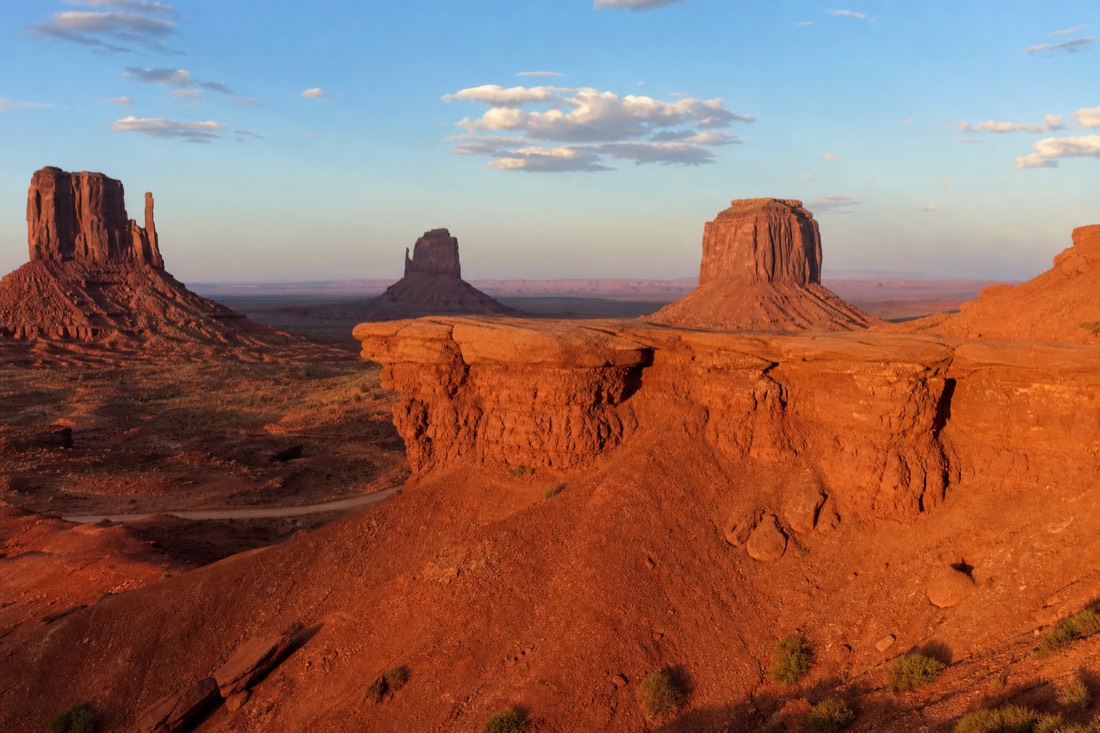
The West Mitten throws a shadow across the sand every clear morning, and I have watched hundreds of visitors miss it because they arrived at noon. By the time the light is flat and white, the shadow that gives that butte its shape is gone. I guide here, so I plan my day around where the sun will be, not where the parking is easy. That single habit is the difference between a snapshot and a photograph in this valley.
Booking choice: Visit the Totem Pole, Sun’s Eye and John Ford Point in the day’s changing light. Explore Sunrise or sunset photography tour
At a glance: 3 hours, English guide, water and native music. Select sunrise OR sunset for your month on Viator. Park entry extra. Uneven surfaces; unsuitable for back conditions. Children need two paying adults.
What are the best photography spots in Monument Valley?
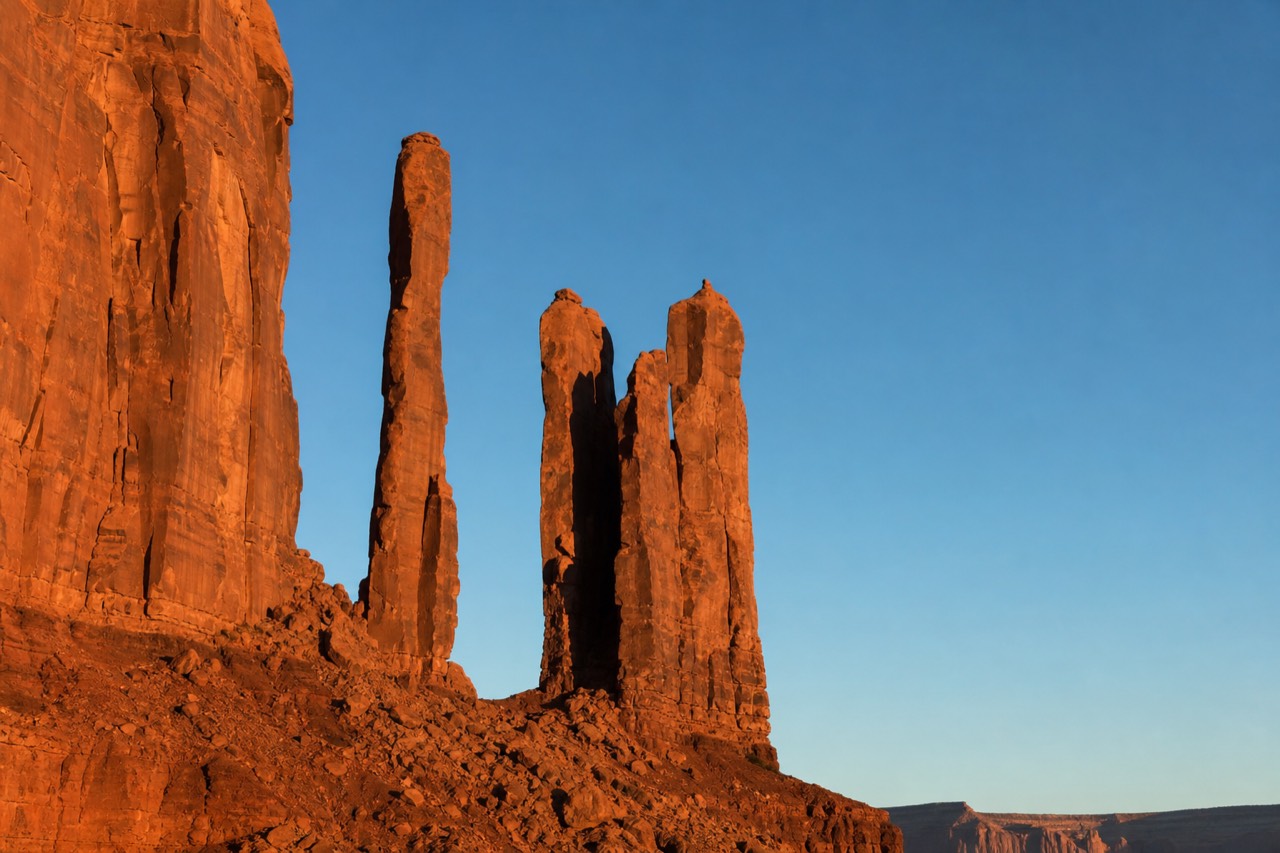
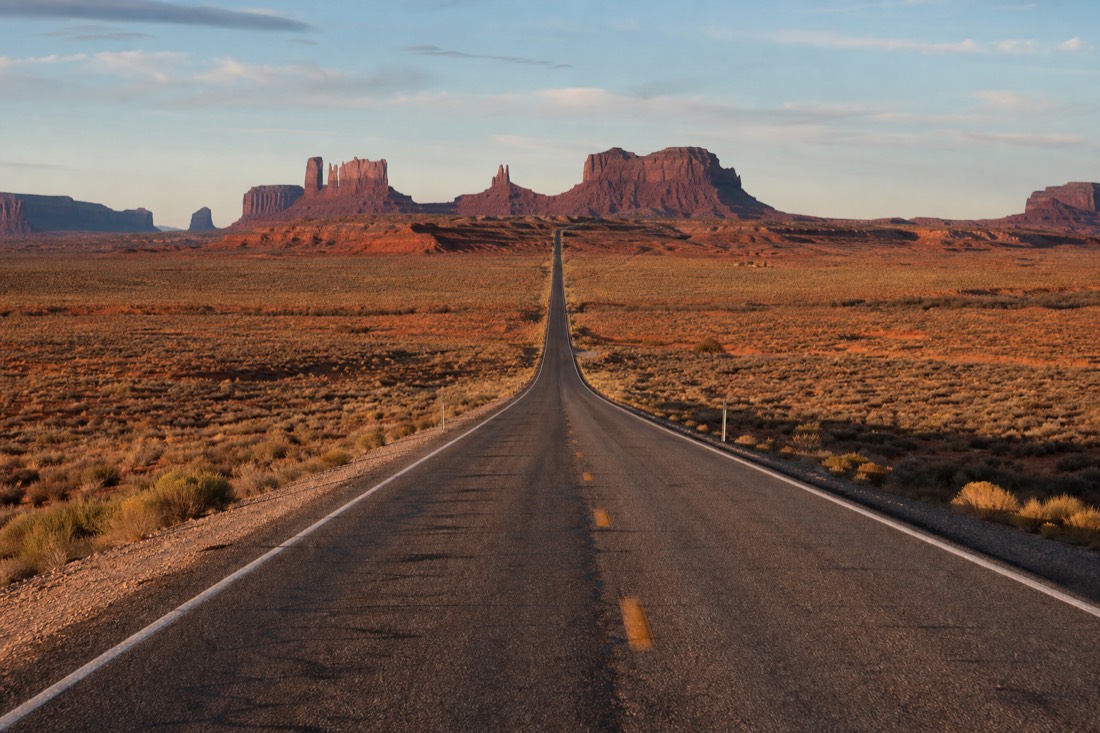
The five that earn their reputation are the Mittens from the visitor center, John Ford Point, Artist's Point, the US-163 "Forrest Gump" stretch north of the park, and the Totem Pole in the backcountry. The first four are reachable on your own; the Totem Pole and the arches need a Navajo guide, because the backcountry is closed to self-drivers.
Each of these gives you a different picture, and they do not all peak at the same hour. The Mittens are a sunrise subject. Artist's Point holds afternoon light beautifully. John Ford Point is the one everyone recognizes from the Westerns, named for the director who shot here. Plan the order by the sun, not the map.
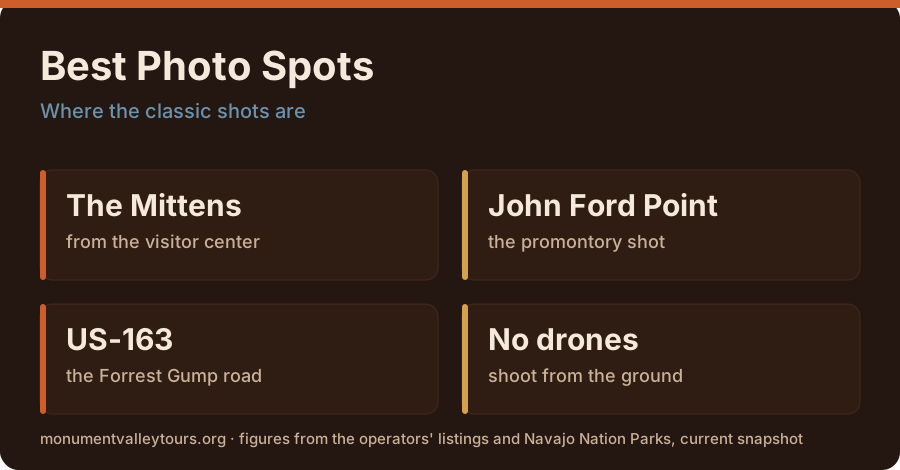
Here is how the main viewpoints break down, with the light each one rewards and whether you can reach it yourself.
| Spot | Best light | Access | What you get |
|---|---|---|---|
| The Mittens (visitor center) | Sunrise | Free-standing overlook, no guide | The postcard: two mitten buttes and Merrick Butte |
| John Ford Point | Late afternoon | On the 17-mile Valley Drive | The classic Western frame, often with a rider |
| Artist's Point | Afternoon | On the Valley Drive (dirt) | Layered buttes and open valley floor |
| Forrest Gump Point (US-163) | Sunrise or sunset | Roadside, north of the park | The straight highway running into the buttes |
| Totem Pole | Sunrise | Backcountry, guide only | The thin spire and Yei Bi Chei, no crowds |
Where do you get the classic Mittens shot?
Stand at the visitor center overlook, the same terrace outside The View Hotel, and shoot east at first light. The West Mitten, East Mitten, and Merrick Butte line up in front of you with the rising sun raking across them. This is the one Monument Valley image almost everyone already has in their head.
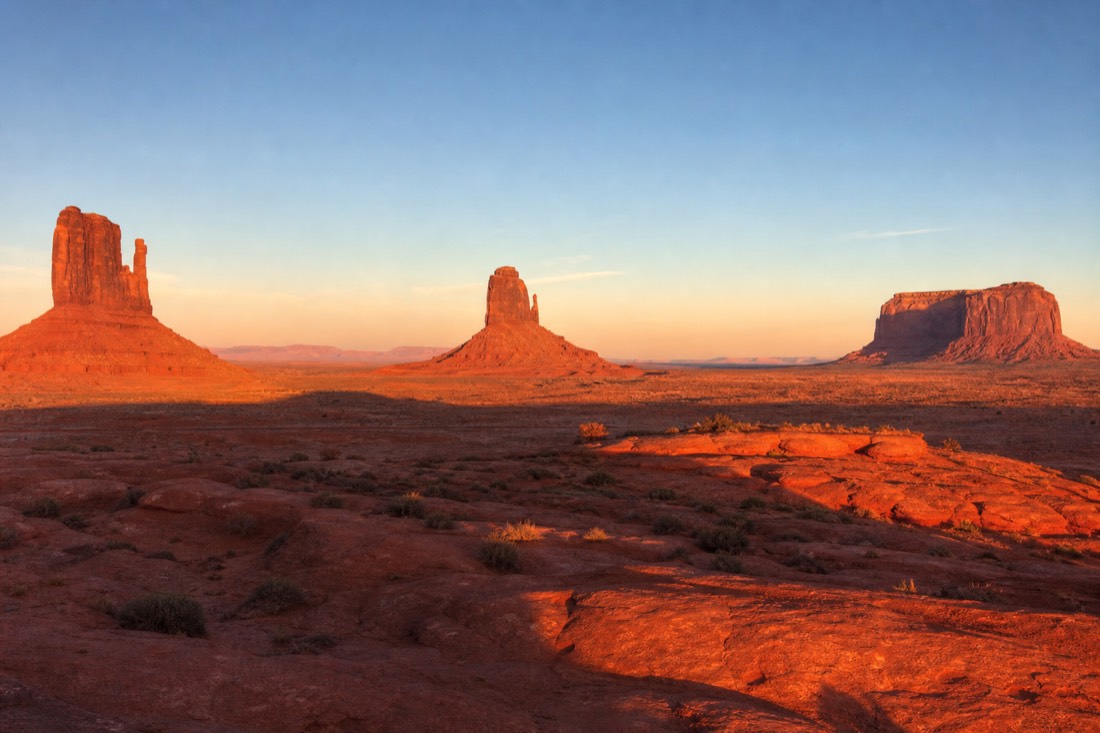
Get there before the sun clears the horizon. The color builds fast and the shadow on the West Mitten is deepest in the first twenty minutes. A tripod helps, because the light is still low and you will want a small aperture to keep the whole scene sharp. This viewpoint sits right at the park entrance, so you do not need a guide or a backcountry permit for it. You do need to be early, and in summer that means before 6 a.m. If a pre-dawn alarm is not your thing, a separate guided sunrise run will have you in position before the first light breaks.
Which viewpoints need a Navajo guide?
Anything past the 17-mile Valley Drive: the Totem Pole, Ear of the Wind, Mystery Valley, Sun's Eye, Big Hogan, and the arches. The backcountry sits on Navajo Nation land and is closed to self-drivers, so a Navajo guide is the only legal way in. That is also where the light is cleanest, because the day-trip crowds never reach it.
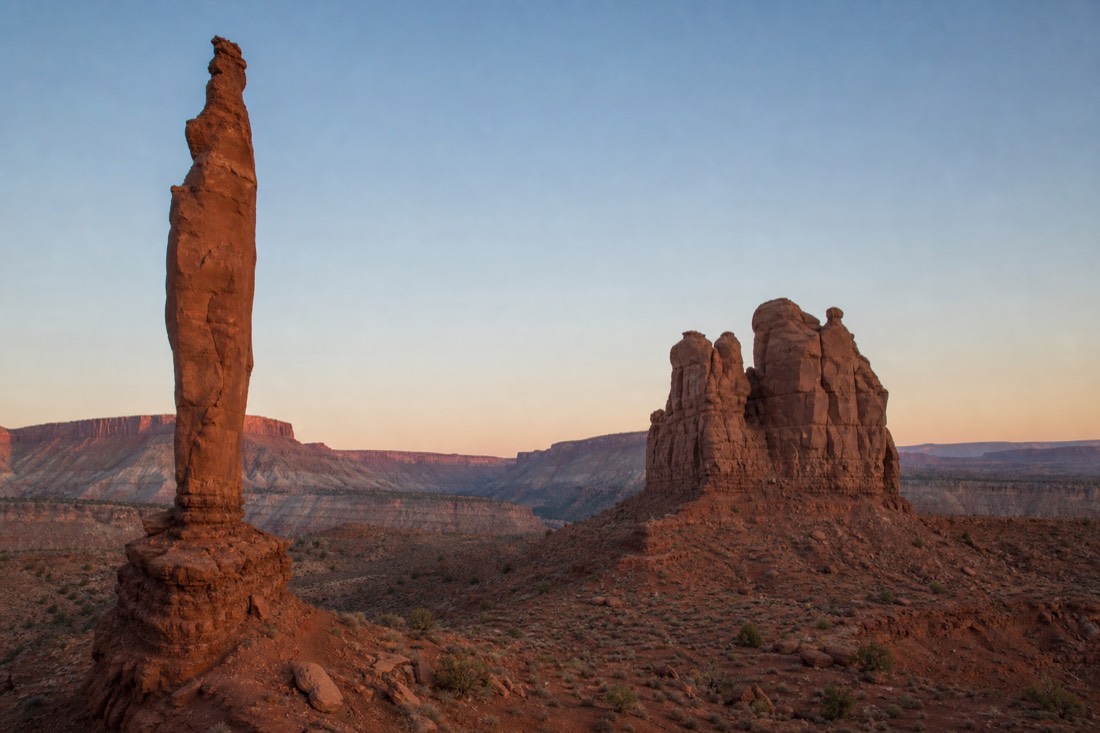
The public loop is genuine and worth driving, but it is a dirt road with washboard, deep sand, and a lot of vehicles kicking up dust by mid-morning. The framed arches and the tall spires are all in the closed zone. The Navajo Nation Parks & Recreation office sets these rules, and they are enforced.
When is golden hour in Monument Valley?
Golden hour here is the first hour after sunrise and the last hour before sunset, when the low sun turns the sandstone deep orange-red. Midday flattens everything. Because the Navajo Nation observes daylight saving time and most of Arizona does not, in summer the valley runs one hour ahead of Phoenix and Page, so check local time before you set an alarm.
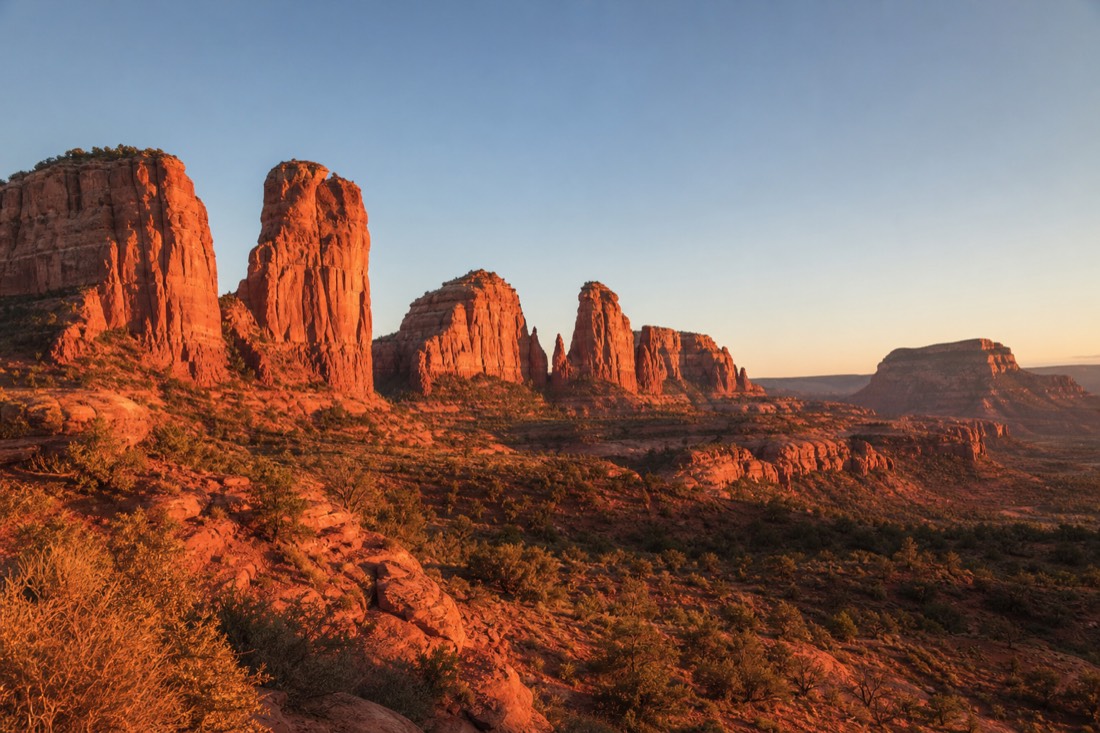
The time-zone detail catches people out every year. If your phone is still on Arizona time from Page or the Grand Canyon, you can arrive an hour late for the light you drove all this way to shoot. Here is how the day tends to run for a photographer.
| Time of day | Light quality | Where to be |
|---|---|---|
| First light to +1h | Warm, low, long shadows | Mittens overlook or a backcountry spire |
| Mid-morning | Warming but harder | On the Valley Drive, moving between buttes |
| Midday | Flat and white, weakest | Off shooting, or scouting compositions |
| Late afternoon | Warming again | John Ford Point, Artist's Point |
| Last hour to sunset | Reddest of the day | Forrest Gump Point or a west-facing butte |
What camera gear and settings work best here?
A wide lens for the big frames and a short telephoto for isolating single buttes cover almost everything. Shoot at f/8 to f/11 for front-to-back sharpness, keep ISO low in the good light, and bring a polarizer to cut haze and deepen the sky. A sturdy tripod matters most at dawn and dusk, and dust protection matters all day on the dirt roads.
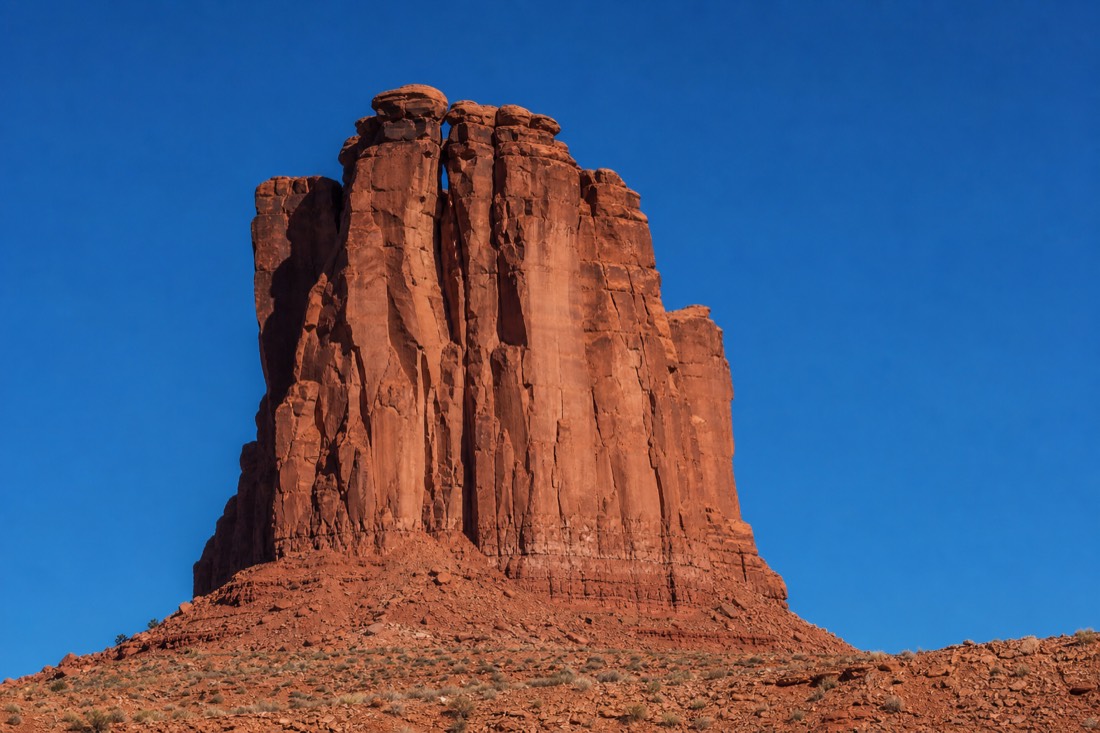
The valley is dusty, and the Valley Drive is loose sand and washboard. Change lenses as little as you can, and keep a blower and a cloth handy. This table is what I tell photographers on my tours.
| Situation | Recommendation |
|---|---|
| Lens for wide scenes | 16-35mm equivalent, for buttes plus foreground sand |
| Lens for single formations | 70-200mm equivalent, to compress and isolate spires |
| Aperture | f/8 to f/11 for depth of field |
| Filters | Polarizer for haze and sky; graduated ND at sunrise |
| Support | Tripod for dawn, dusk, and any long exposure |
| Protection | Blower, cloth, and a sealed bag against red dust |
Can you fly a drone in Monument Valley?
No. Drones are prohibited across Monument Valley Navajo Tribal Park, and the ban is taken seriously on Navajo Nation land. Commercial or paid photography also needs a Special Use Permit arranged in advance. If you want an aerial-style shot, the roadside pullouts on US-163 and the high overlook at the visitor center give you elevation without breaking the rules.
I mention this on every tour because visitors assume it works like a US National Park, and it does not. Monument Valley is Navajo Nation land, not a National Park, so the America the Beautiful pass does not apply and the drone rules are the Nation's own. Two more courtesies matter: ask before photographing any Navajo resident, and stay on marked roads. The full regulations sit with the Navajo Nation, and the valley's status is covered in the Monument Valley overview.
Is a guided tour worth it for the photography?
For the signature backcountry shots, yes. The framed arches, Sun's Eye, and the Totem Pole at dawn are all in the closed zone, and a Navajo guide is the only way there. A guide also reads the light, times the stops, and knows the angles the tour vans skip. For the roadside icons alone, you can shoot solo.
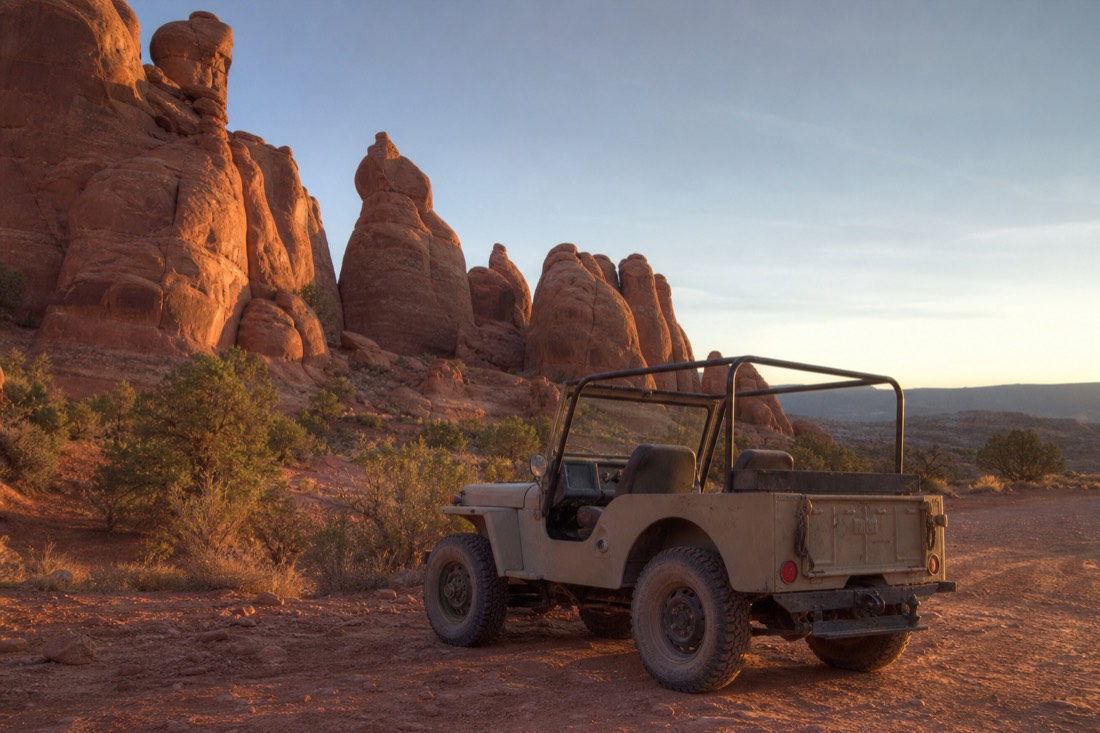
If you are chasing the light rather than the crowds, the difference is stark. A backcountry drive at sunrise puts you at a spire before the first van leaves the visitor center, and the guide already knows which way it faces. Some photographers pair a guided run with a self-driven loop the same day. If you are still weighing whether the detour pays off at all, my honest take is in is Monument Valley worth it, and the light question specifically is in sunrise vs sunset. For timing the whole trip, start with the best time to visit.
Make room in your itinerary
Sunrise or sunset photography tour
Have a travel date in mind? Check this option before arranging the rest of your trip. Visit the Totem Pole, Sun’s Eye and John Ford Point in the day’s changing light.
Editorial starting point; use the choices below to check the fit.
Compare options and tailor your choice
3 hours, English guide, water and native music. Select sunrise OR sunset for your month on Viator. Park entry extra. Uneven surfaces; unsuitable for back conditions. Children need two paying adults.
Meet at The View Hotel loading area, 50 yards west, 15 minutes early; return there. Confirm with the operator 24 hours ahead.
Ride to Big Hogan, Sun’s Eye and the Totem Pole with a Navajo guide. Shared 2.5-hour tour, English. Park entry and tips extra. Hogan visit and weaving excluded. Not recommended for pregnancy, back/spinal or serious heart conditions.
Look beyond the daytime landscape with Navajo star stories and a guided night outing. 2.5 hours, English guide and water. Park entry extra. Stargazing depends on weather. Telescope not promised on this Viator option. Not recommended for pregnancy, spinal or serious heart conditions.
Select a date to see the Viator departure schedule.
Schedule only. Final availability, options and price are confirmed on Viator.Affiliate links: we may earn a commission at no extra cost to you. Product facts checked September 15, 2026.