What Movies Were Filmed in Monument Valley?
The valley you picture when you hear the word Western was built on film, one John Ford Western at a time, starting in 1939.
 Written with Daniel Begay, Monument Valley tour guide & Navajo cultural specialist
Short answer
Monument Valley is the backdrop of John Ford's Westerns, starting with Stagecoach in 1939, and going on through Fort Apache (1948), She Wore a Yellow Ribbon (1949) and The Searchers (1956). John Ford Point is named for the director. The Forrest Gump running scene was filmed on US-163 north of the park, not inside it.
The first time I drove a film buff out to John Ford Point, he went quiet, then said the light was exactly like the movies. It should be. This is where the movies got it. For most of a century, when Hollywood needed the West to look like the West, it came to this stretch of Navajo Nation sandstone, and the man who started it kept coming back until his name got stuck to a cliff.
Booking choice: Ride to Big Hogan, Sun’s Eye and the Totem Pole with a Navajo guide. Explore Backcountry tour with Navajo guide
At a glance: Shared 2.5-hour tour, English. Park entry and tips extra. Hogan visit and weaving excluded. Not recommended for pregnancy, back/spinal or serious heart conditions.
What movies were filmed in Monument Valley?
Monument Valley is best known for John Ford's Westerns. Stagecoach (1939) was the first major one shot here, followed by My Darling Clementine (1946), Fort Apache (1948), She Wore a Yellow Ribbon (1949) and The Searchers (1956). John Wayne starred in the Ford films made here, and John Ford Point on the loop is named for the director.
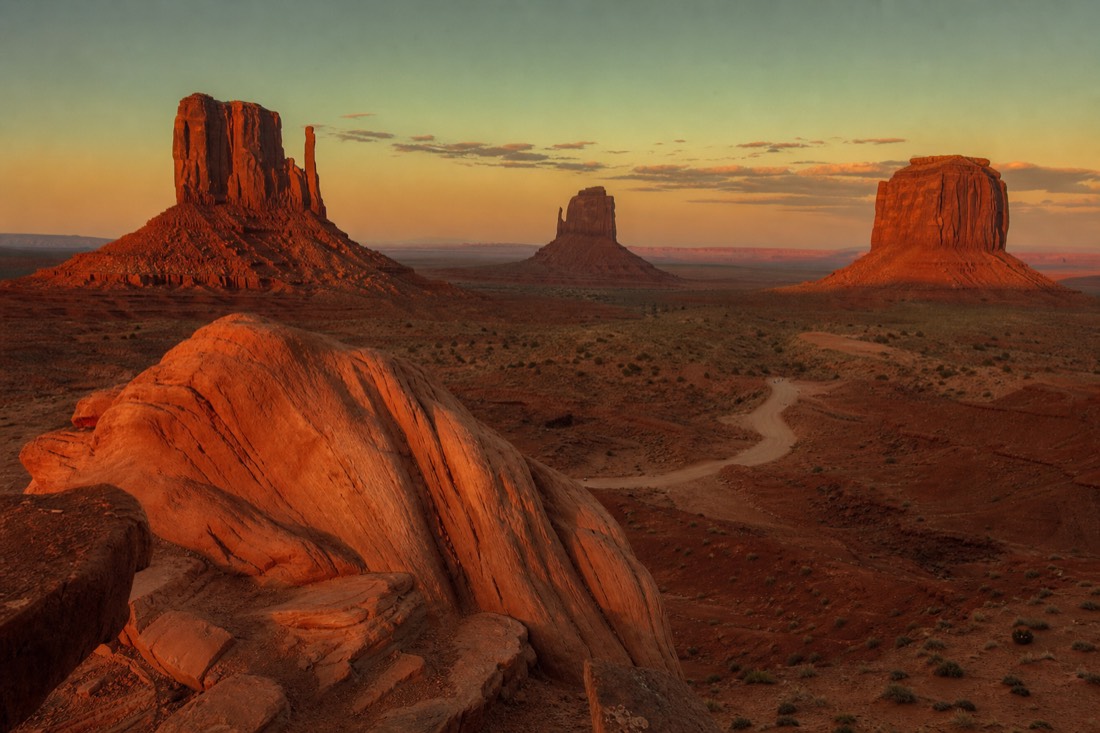
Ford did not invent the valley, but he made it the visual shorthand for the frontier. Before Stagecoach, few outside the Navajo Nation had seen these buttes on screen. After it, the towering red formations became so tied to the genre that later filmmakers used them as instant shorthand for "the Old West," whether or not the story was set anywhere near Arizona. If you want that same cinematic light on John Ford Point for yourself, a guided sunset tour catches the buttes when they burn reddest on camera.
| Film | Year | Director |
|---|---|---|
| Stagecoach | 1939 | John Ford |
| My Darling Clementine | 1946 | John Ford |
| Fort Apache | 1948 | John Ford |
| She Wore a Yellow Ribbon | 1949 | John Ford |
| The Searchers | 1956 | John Ford |
Why did John Ford keep coming back here?
The trader Harry Goulding brought Ford to Monument Valley in 1938 while pitching it as a Western location. Ford shot Stagecoach here the next year and returned for decades. The work also mattered locally: during the Depression, local Navajo people were hired as extras and crew, and the film money helped sustain the community.
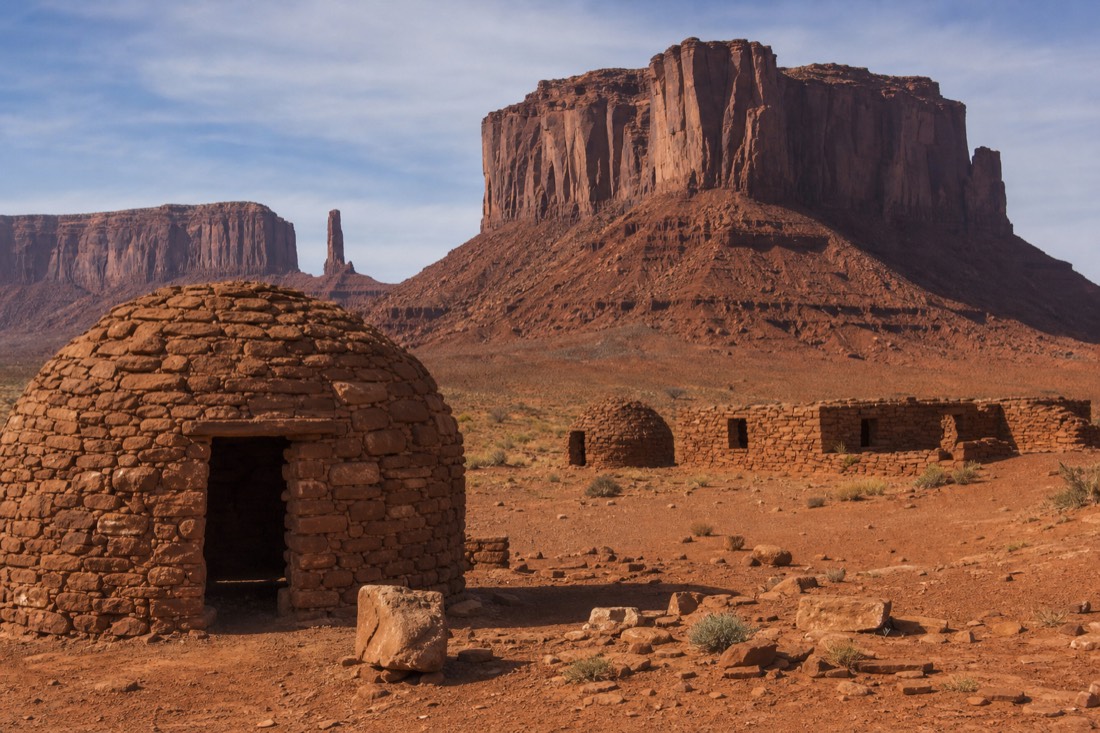
That last part is the piece the postcards skip. Goulding's push was partly a rescue plan for a community hit hard by the 1930s, and the productions brought paying work to families out here. You can still stay at Goulding's Lodge just outside the park, where that history started. If you want the fuller story of the director and his leading man, John Wayne and John Ford in Monument Valley tells it, and the iconic viewpoints covers the exact spots the cameras used.
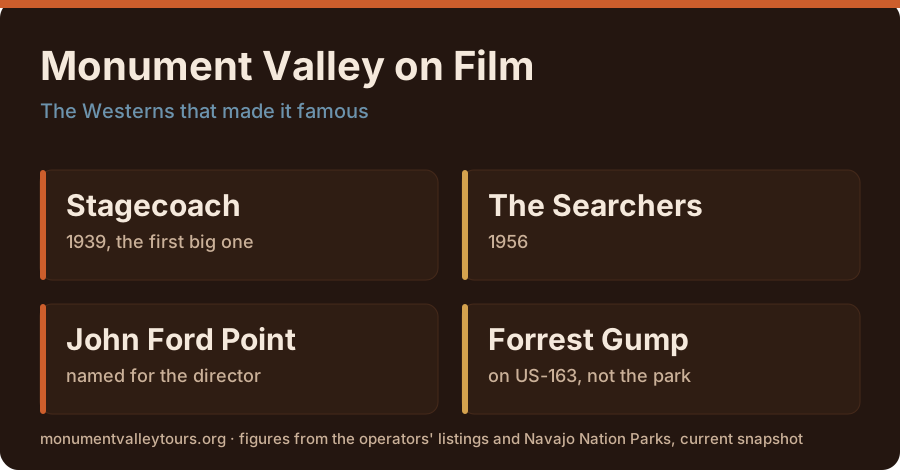
The valley kept working long after the Ford era, turning up in films well outside the Western genre:
| Production | Year | Note |
|---|---|---|
| Once Upon a Time in the West | 1968 | Two scenes in the valley |
| 2001: A Space Odyssey | 1968 | Landscape footage |
| Back to the Future Part III | 1990 | Western sequences |
| Car and travel commercials | Various | The buttes as shorthand for the open West |
Was Forrest Gump filmed in Monument Valley?
Not inside the tribal park. The famous scene where Forrest stops running was shot on US-163, the highway north of the park boundary, at the spot now nicknamed Forrest Gump Point. It looks straight down the road toward the buttes, but it sits on the public highway, not on the guided loop, so you can pull over and see it for free.
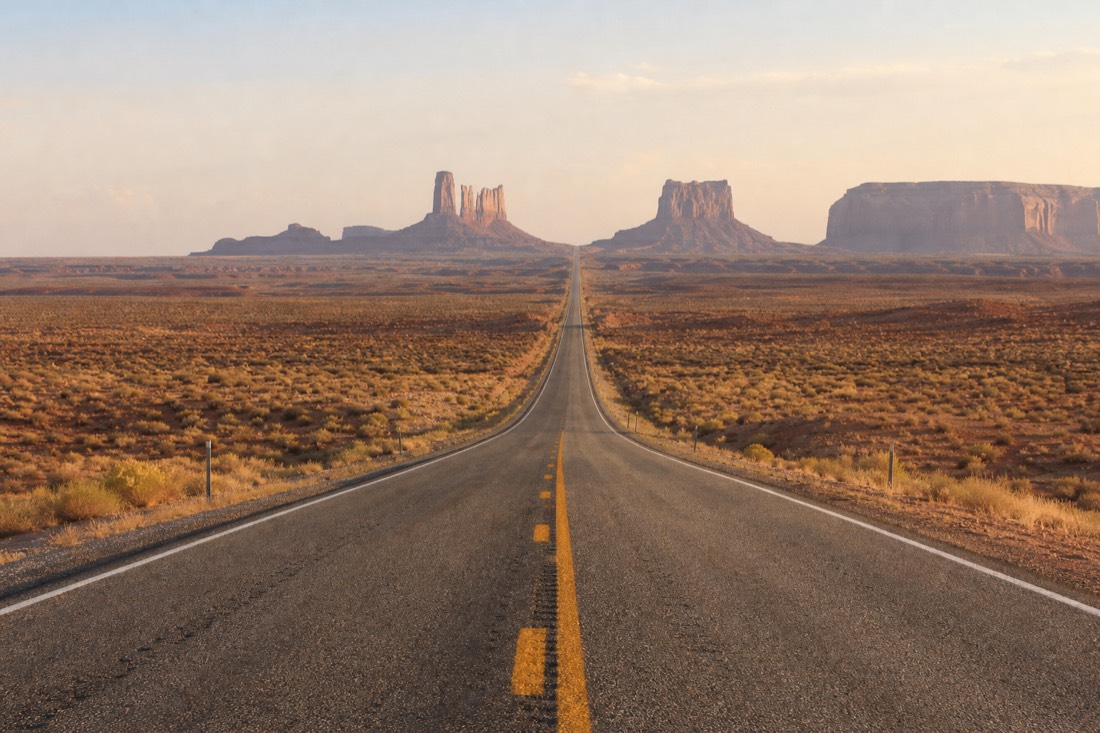
This trips people up constantly, so here is the map in plain terms.
| Scene or shot | Where it was filmed | Inside the park? |
|---|---|---|
| John Ford's Westerns (Stagecoach, The Searchers) | The valley floor and the 17-mile loop | Yes |
| John Ford Point overlook | On the guided loop | Yes |
| Forrest Gump running scene | US-163 highway, north of the boundary | No |
Did John Wayne really say "So this is where God put the West"?
Probably not, at least not in any documented way. The line is quoted all over Monument Valley merchandise and tour patter, but it is not reliably sourced to John Wayne. Treat it as an apocryphal, often-attributed saying rather than a verified quote. The real, checkable history is the run of Ford films and the Navajo crews who made them.
I mention this because getting the facts right is part of respecting the place. The Ford filmography, documented film by film, is solid ground. The tidy quote is not, and a good guide will tell you so instead of selling it as gospel.
You can drive the loop and photograph John Ford Point on your own. What a Navajo-guided run adds is the context: which shots were framed where, whose grandparents worked those productions, and the backcountry the movie crews used that self-drivers cannot reach. If you want that guided, culture-first version, take a Navajo tribal tour, and the Navajo Spirit scenic tour is the highest-rated place to start.
Make room in your itinerary
Backcountry tour with Navajo guide
Have a travel date in mind? Check this option before arranging the rest of your trip. Ride to Big Hogan, Sun’s Eye and the Totem Pole with a Navajo guide.
Editorial starting point; use the choices below to check the fit.
Compare options and tailor your choice
Shared 2.5-hour tour, English. Park entry and tips extra. Hogan visit and weaving excluded. Not recommended for pregnancy, back/spinal or serious heart conditions.
Meet outside The View Hotel in the tour loading area 15 minutes early; return there. KOA pickup only by arrangement for overnight guests.
A Navajo guide connects the Mittens, restricted arches and local stories. Shared tour, English guide, about 3 hours. Park entry and tips extra. Minimum two to operate; solo travelers must arrange pairing with the operator.
GPS-triggered stories accompany your own drive, with offline audio downloaded in advance. Allow 2–3 hours. English/French audio; one purchase per car. No live guide, vehicle or park admission. Road access depends on conditions and your vehicle.
The extended route adds a hogan visit and a live Navajo rug-weaving demonstration. Shared 3.5-hour tour, English guide, open 4x4. Park entry extra. Children accompanied; unsuitable for back/spinal or serious heart conditions and pregnancy beyond five months.
Select a date to see the Viator departure schedule.
Schedule only. Final availability, options and price are confirmed on Viator.Affiliate links: we may earn a commission at no extra cost to you. Product facts checked September 15, 2026.