How to Visit Navajo Nation Land Respectfully at Monument Valley
Monument Valley is a living Navajo community, not just scenery. A local guide's rules on photographing people, drones, alcohol, staying on marked roads, and why backcountry needs a guide.
 By Daniel Begay, Monument Valley tour guide & Navajo cultural specialist
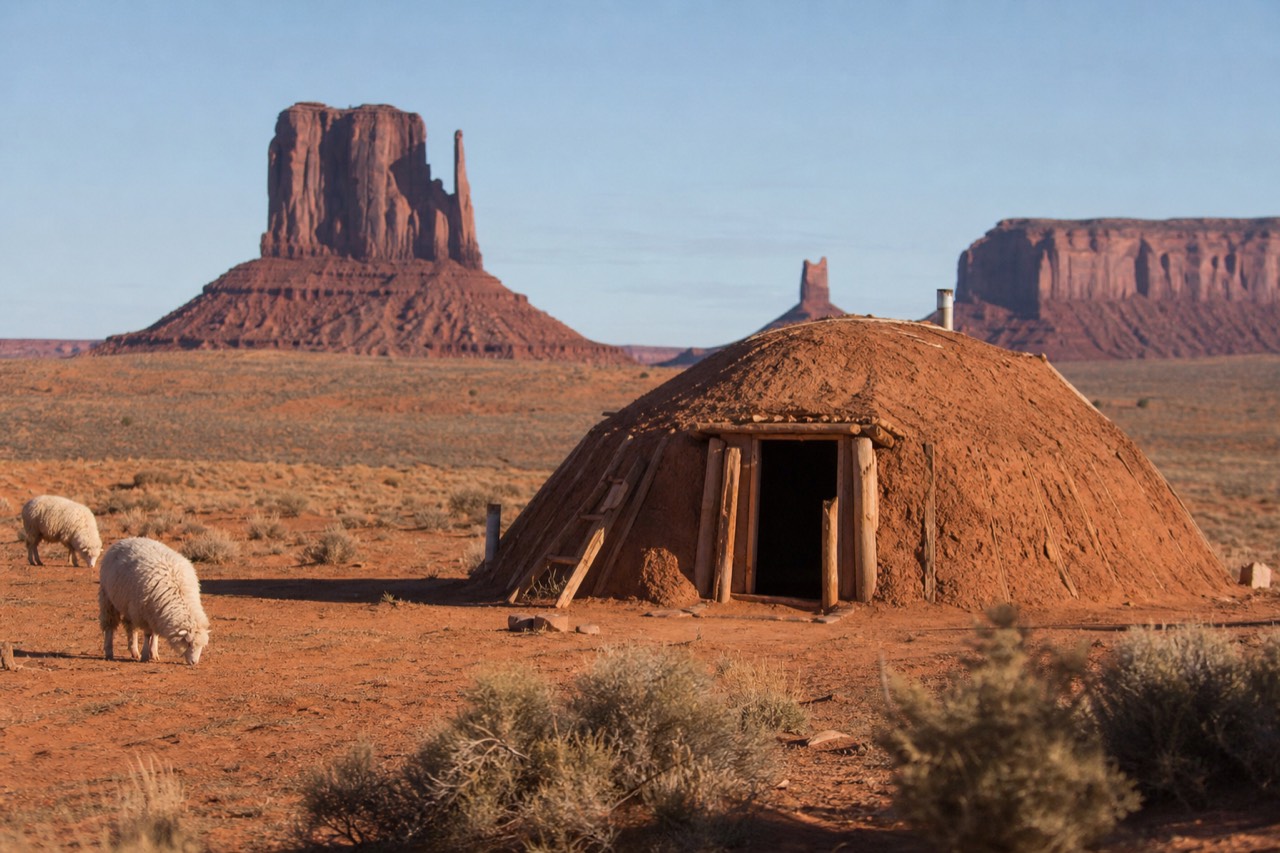
A guest once lifted a camera toward an older woman selling jewelry near John Ford Point without a word, and I watched her turn her back. She was not being rude. She just had not agreed to be a photograph. I stepped in, we talked, and she ended up telling him about her clan and her weaving. That is the whole difference here. Monument Valley is somebody's front yard, and I have spent since 2022 helping visitors treat it that way.
Booking choice: A Navajo guide connects the Mittens, restricted arches and local stories. Explore Navajo Spirit scenic tour
At a glance: Shared tour, English guide, about 3 hours. Park entry and tips extra. Minimum two to operate; solo travelers must arrange pairing with the operator.
Is Monument Valley a national park or Navajo land?
Monument Valley is a Navajo Nation tribal park, not a US National Park. It sits on sovereign Navajo land with its own rules, its own entrance fee of around 10 dollars per person paid at the gate, and its own governing body. Your America the Beautiful national parks pass does not work here.
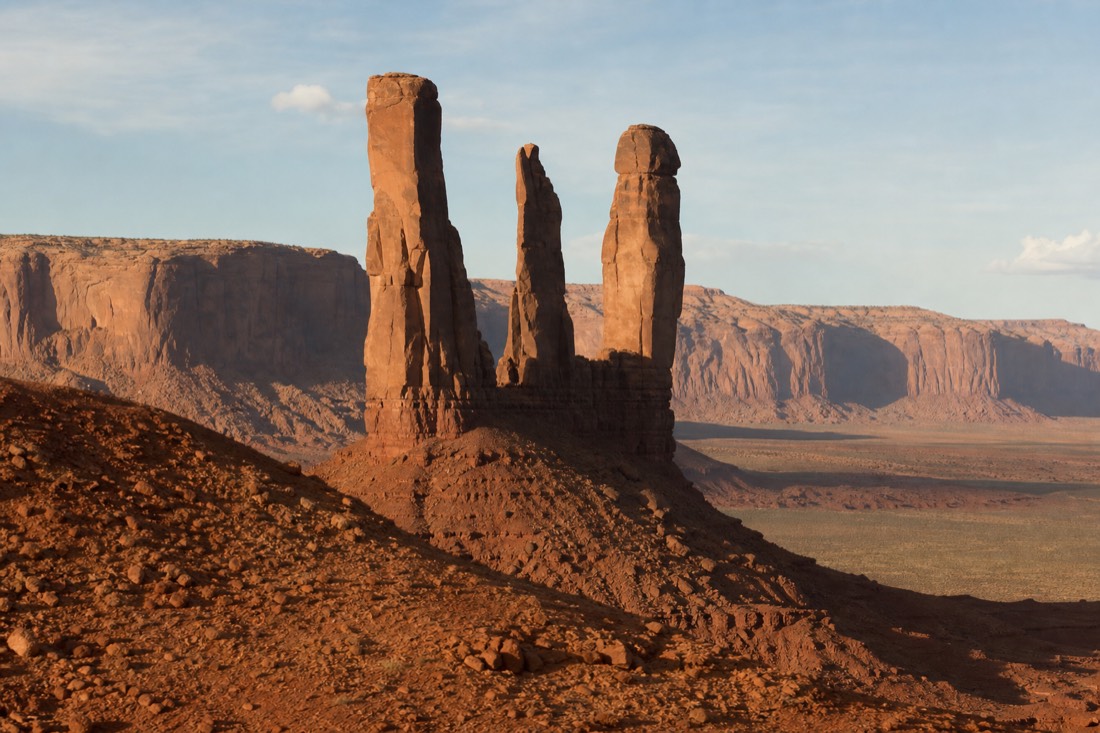
This matters beyond the paperwork. Because it is tribal land, the Navajo Nation sets and enforces the regulations directly, and families live and work inside the valley itself, not just around it. The official Navajo Nation Parks and Recreation office publishes the current fees, hours, and rules, and those rules exist to protect both the landscape and the people whose home it is. Treating the visit like any other roadside attraction is where most disrespect starts, usually without anyone meaning harm.
The practical takeaways are simple. Budget the tribal fee separately from any tour price. Expect it to be paid at the gate. And understand that when a rule here differs from what you are used to in a national park, the tribal rule is the one that counts.
What are the main dos and don'ts on Navajo land?
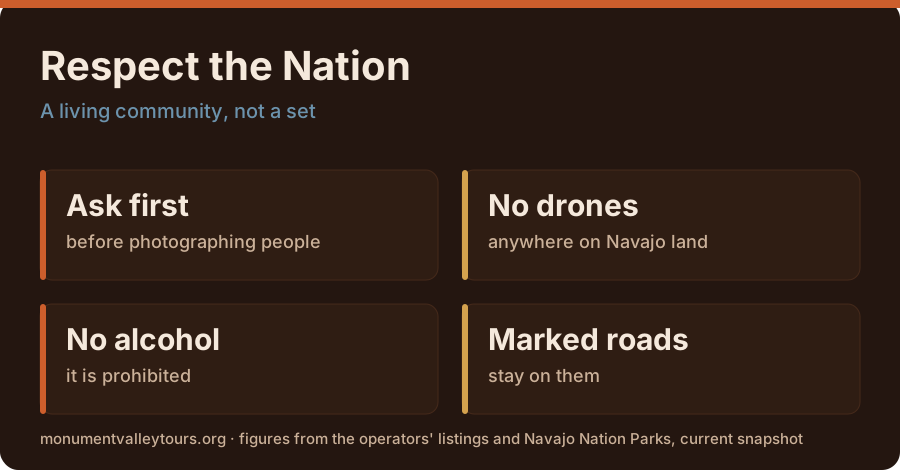
Do stay on marked roads and trails, ask before photographing any Navajo person, pack out all your trash, and book Navajo-owned operators. Don't fly a drone, don't bring alcohol or drugs, don't climb the formations, and don't wander into the backcountry on your own. Those are the rules that keep you a welcome guest.
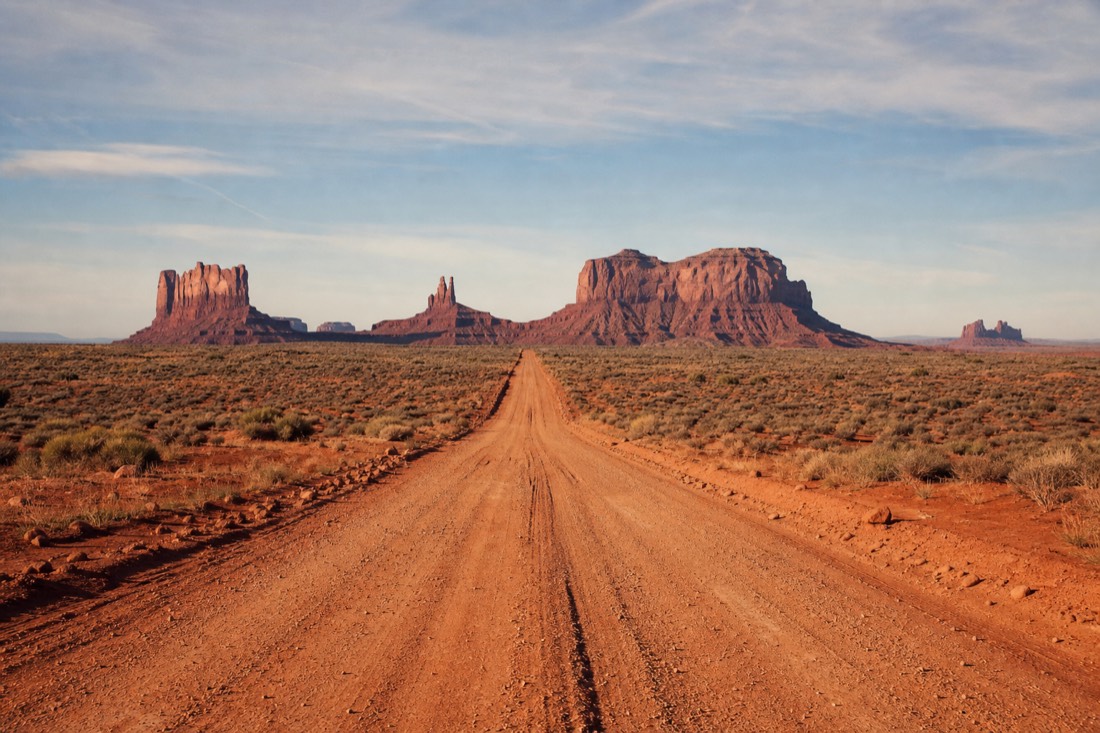
Most of these are not unique to Monument Valley, they are just enforced more seriously because this is a living community and a sacred landscape at once. Drones are flat-out prohibited on Navajo Nation land. Alcohol and illegal drugs are prohibited too. Climbing on the monuments or disturbing any site is off limits. And the backcountry beyond the scenic loop is closed to unguided visitors, which is not a money grab, it is how the Nation protects places that matter.
| Do | Don't |
|---|---|
| Stay on designated roads and trails | Fly a drone anywhere on Navajo land |
| Ask permission before photographing people | Bring alcohol or illegal drugs |
| Pack out every piece of trash | Climb on or deface the formations |
| Book Navajo-owned and Navajo-guided tours | Wander into the backcountry alone |
| Budget the tribal entrance fee at the gate | Assume a national parks pass applies |
If you want the wider pre-trip checklist, our guide on what to know before visiting Monument Valley puts these alongside the practical logistics like fuel, water, and cell signal.
What needs a permit or a Navajo guide here?
Backcountry sites like Ear of the Wind, Mystery Valley, the arches, and the hogans all require a Navajo guide, and commercial photography or filming requires a Special Use Permit from the Navajo Nation. The 17-mile scenic loop you can self-drive, but everything beyond it is guide-only or permit-only.
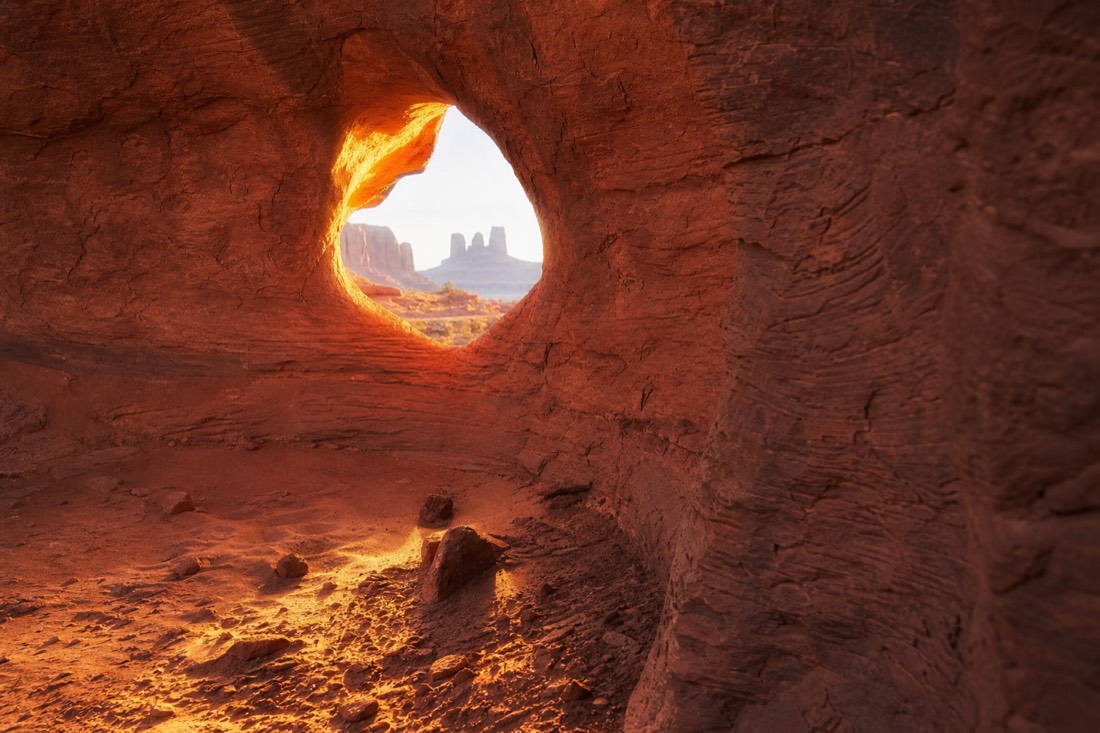
The line between what you can do alone and what needs a guide is clean once you see it. The self-drive Valley Drive loop is open to your own vehicle, though it is rough dirt with washboard and deep sand, and motorcycles and RVs are banned from it. Step off that loop and you need a permitted Navajo guide. Point a camera at the valley for commercial use and you need a Special Use Permit. Camp or hike the backcountry and you need a permit from the visitor center.
| Activity | What it needs |
|---|---|
| Driving the 17-mile scenic loop | Own vehicle allowed, tribal fee, no bikes or RVs |
| Backcountry (Ear of the Wind, Mystery Valley, arches, hogans) | Navajo guide required |
| Commercial photography or filming | Special Use Permit from the Nation |
| Backcountry hiking or camping | Permit from the visitor center |
| Personal snapshots of people | Verbal permission from the person |
This is exactly why the backcountry runs are guided: it is not optional. Our guide on whether you need a guide for Monument Valley walks through the same question in more depth.
How do you photograph Monument Valley respectfully?
Photograph the landscape freely, but always ask before photographing a Navajo person, and never fly a drone. If someone agrees to a portrait, a small purchase from their stand or a tip is the courteous norm. Commercial shoots need a Special Use Permit. The land is open to your lens; the people are not, until they say yes.
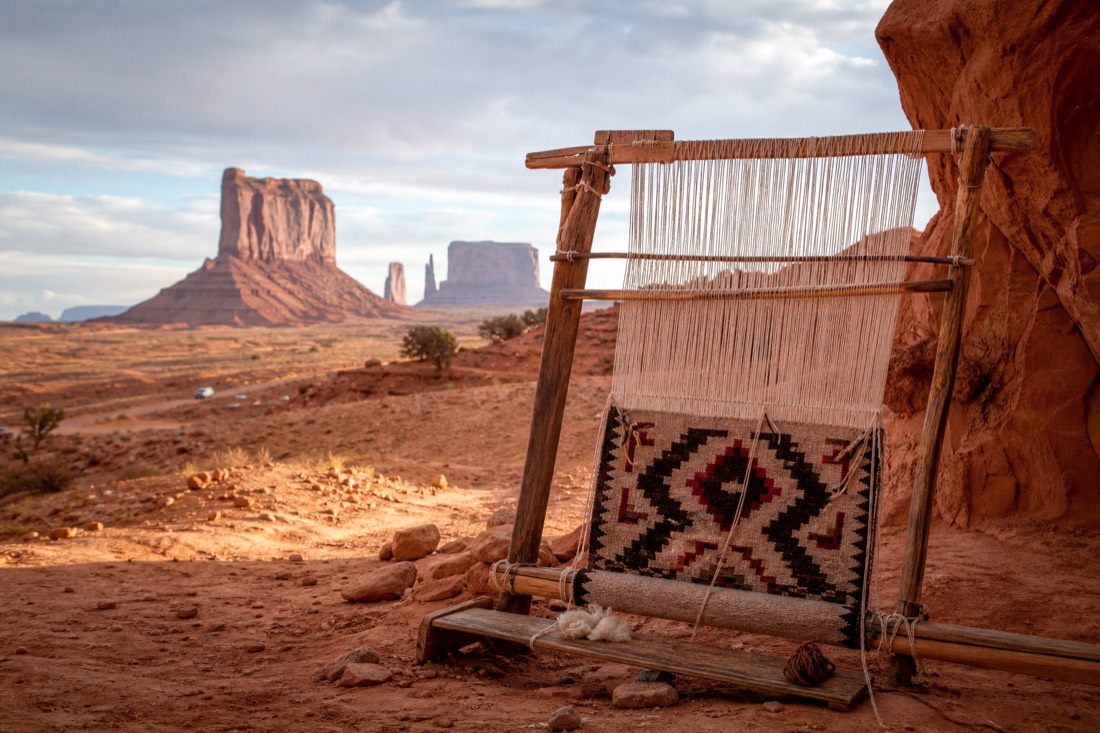
Personal photography of the rocks is welcome, that is most of why you came. The etiquette kicks in around people. A vendor, a shepherd, a guide, anyone Navajo, gets asked first, in plain words, and gets to say no. Many will say yes, especially if you have bought a bracelet or shown real interest in their work, and a tip for a posed portrait is normal and appreciated. The official rules and regulations spell out the drone ban and the commercial-permit requirement.
| Subject | Rule |
|---|---|
| The buttes and landscape | Shoot freely for personal use |
| A Navajo person | Ask first, every time, and accept no |
| A posed portrait | A small purchase or tip is courteous |
| Aerial or drone shots | Prohibited, no exceptions |
| Commercial or paid shoots | Special Use Permit required |
Why does supporting Navajo-owned operators matter?
Booking a Navajo-owned, Navajo-guided operator keeps your money in the community whose land you are visiting, funds the families who live here, and gets you a guide who knows the stories, the sacred sites, and the light. It is both the respectful choice and, honestly, the better tour.
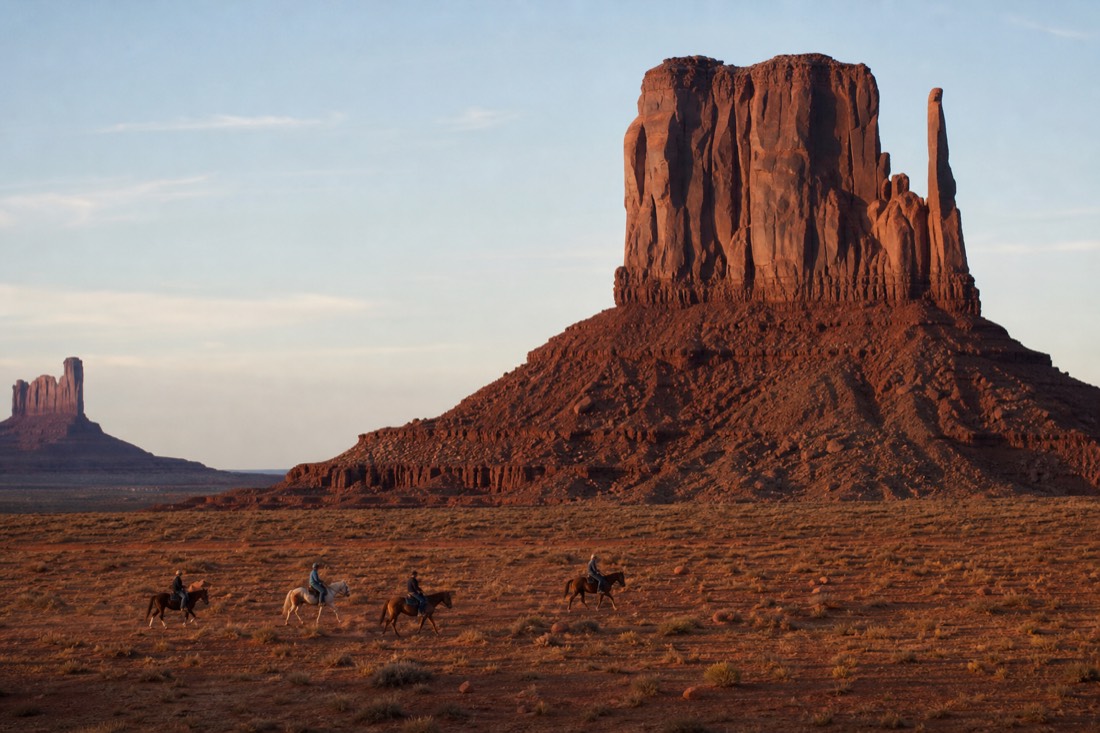
The film history here already shows the pattern. When Harry Goulding brought Hollywood to the valley in 1938, the work sustained the local Navajo economy through the Depression, and Navajo people worked as extras and crew. The same logic holds now. A guide from here does not just drive you around, they translate the place: which formation figures in a ceremony, how a hogan is built and lived in, why a certain wash floods in monsoon season. You cannot buy that from an app. For the deepest version of that, an overnight stay in a traditional hogan keeps you on the land after the day-trippers have driven out.
Reading up before you arrive is part of the respect too. The rest of the blog covers what makes the valley special and how the light works, and if you come ready to be a guest rather than a spectator, the valley opens up in a way most visitors never get to feel.
Make room in your itinerary
Navajo Spirit scenic tour
Have a travel date in mind? Check this option before arranging the rest of your trip. A Navajo guide connects the Mittens, restricted arches and local stories.
Editorial starting point; use the choices below to check the fit.
Compare options and tailor your choice
Shared tour, English guide, about 3 hours. Park entry and tips extra. Minimum two to operate; solo travelers must arrange pairing with the operator.
Meet at the round, green-roof Navajo Welcome Center off US-163; return there. No hotel pickup.
The extended route adds a hogan visit and a live Navajo rug-weaving demonstration. Shared 3.5-hour tour, English guide, open 4x4. Park entry extra. Children accompanied; unsuitable for back/spinal or serious heart conditions and pregnancy beyond five months.
Ride to Big Hogan, Sun’s Eye and the Totem Pole with a Navajo guide. Shared 2.5-hour tour, English. Park entry and tips extra. Hogan visit and weaving excluded. Not recommended for pregnancy, back/spinal or serious heart conditions.
Visit the Totem Pole, Sun’s Eye and John Ford Point in the day’s changing light. 3 hours, English guide, water and native music. Select sunrise OR sunset for your month on Viator. Park entry extra. Uneven surfaces; unsuitable for back conditions. Children need two paying adults.
Select a date to see the Viator departure schedule.
Schedule only. Final availability, options and price are confirmed on Viator.Affiliate links: we may earn a commission at no extra cost to you. Product facts checked September 15, 2026.